
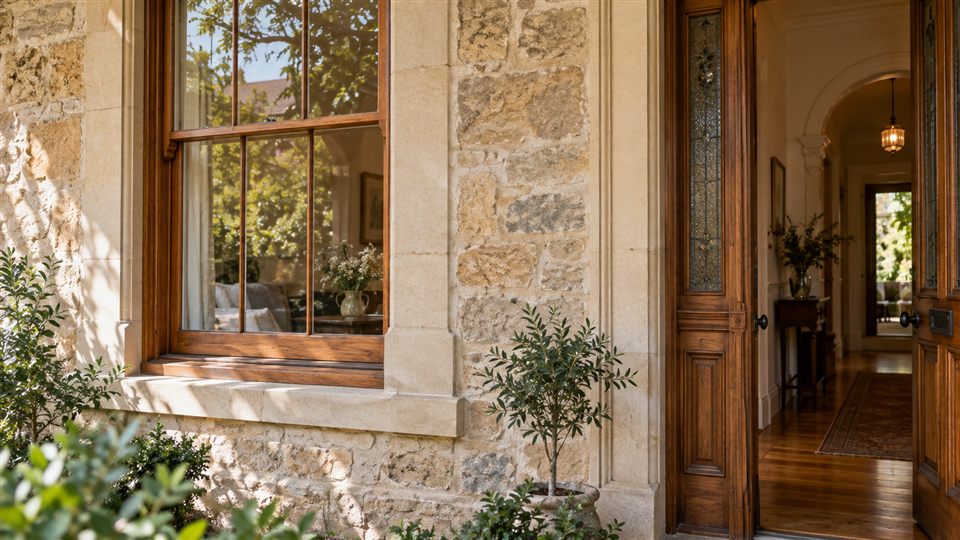
Heritage Status, Significance and Original Timber
Age or an architectural style alone does not establish heritage protection. Check the property’s status and discuss the proposed work through the relevant planning and heritage pathway before changing significant fabric. Approval requirements depend on the place and the work; there is no universal permit or mandatory adviser rule that can be inferred from a timber repair description. Official guidance is linked in the FAQ below.
Heritage timber work brings together the significance of existing fabric, its condition and the building’s present use. A visible original window may have heritage value even when it needs careful repair for weathering or operation. Retention can include targeted repairs; it need not mean leaving every defect untouched.
Original Profiles and Joinery Evidence for Repairs
Surviving profiles, joints, hardware and finish evidence help establish an appropriate detail. A traditional joint or particular species may be relevant, but the repair specification should follow the actual element and the agreed conservation approach. Do not assume every period building needs the same timber, connector or coating simply because its appearance is similar.
Profiles, surviving sections, old photographs, hardware and adjacent examples can all inform a repair or replacement detail. Recording these references before dismantling helps avoid a generic modern interpretation. Where a precise match is not possible, the proposed difference should be discussed openly with the project team and any relevant heritage adviser, not concealed by vague language.
For example, an adjacent intact sash may show a profile that a damaged window no longer reveals. Record it before removal, then agree whether the proposed detail should be repaired, replicated or referred for conservation advice.
Assess retained joinery and justified replacement · View the recorded verandah timber details
Conservation Advice and Carpentry Responsibilities
We discuss heritage timber repair using the recorded condition, conservation advice and agreed project documents. Before the affected work is booked, the scope needs the required assessment, drawings and authorisations. Formal approvals remain with the relevant authority, while heritage advisers and other specialists address their own responsibilities.
Structural concerns, active water entry, glazing, suspect coatings and other old materials may need separate assessment and specialist arrangements. Include those responsibilities in the project brief. A carpentry discussion does not establish engineering, hazardous-material or approval authority, and preparation should not disturb unknown materials merely to obtain a photograph.
Moisture Checks, Handover Records and Future Care
Timber does not fail in isolation. Flashing, drainage, glazing, paint, sealants, ventilation and adjacent masonry can all influence the service life of a repaired element. A restoration scope should identify these interfaces and the trades involved. This protects both the historic material that remains and the new timber introduced as part of a careful repair.
Keep photos, notes on retained and replaced elements, material or finish information, and a simple schedule for review. This record gives future owners or trades a clearer picture of what was repaired and why. Heritage stewardship is easier when maintenance is based on evidence rather than a cycle of reacting only after paint failure, water entry or decay becomes obvious.
Heritage conservation decision questions
Does heritage timber restoration rule out replacement of damaged pieces?
No. Retain sound significant material where appropriate, then compare local repair, replication or replacement against condition and the agreed conservation approach. Document the reason for each intervention.
Does an old Adelaide house automatically count as heritage listed or need approval?
No. Age alone does not establish heritage listing or the approval requirements. Check the property status and the proposed work. PlanSA explains how to find out whether approval is needed; the relevant authority determines the applicable requirements.
Where can I read about work in a State Heritage Area?
The South Australian environment department explains living and working in a State Heritage Area. Use that guidance to clarify the place and proposal with the relevant authority; do not assume the same pathway applies to every older property.
What should I read once the conservation approach is clear?
Use the practical heritage timber repair guide to prepare a condition record, identify elements and describe the proposed scope. Bring existing project advice to the discussion so the carpentry quote follows the agreed approach.