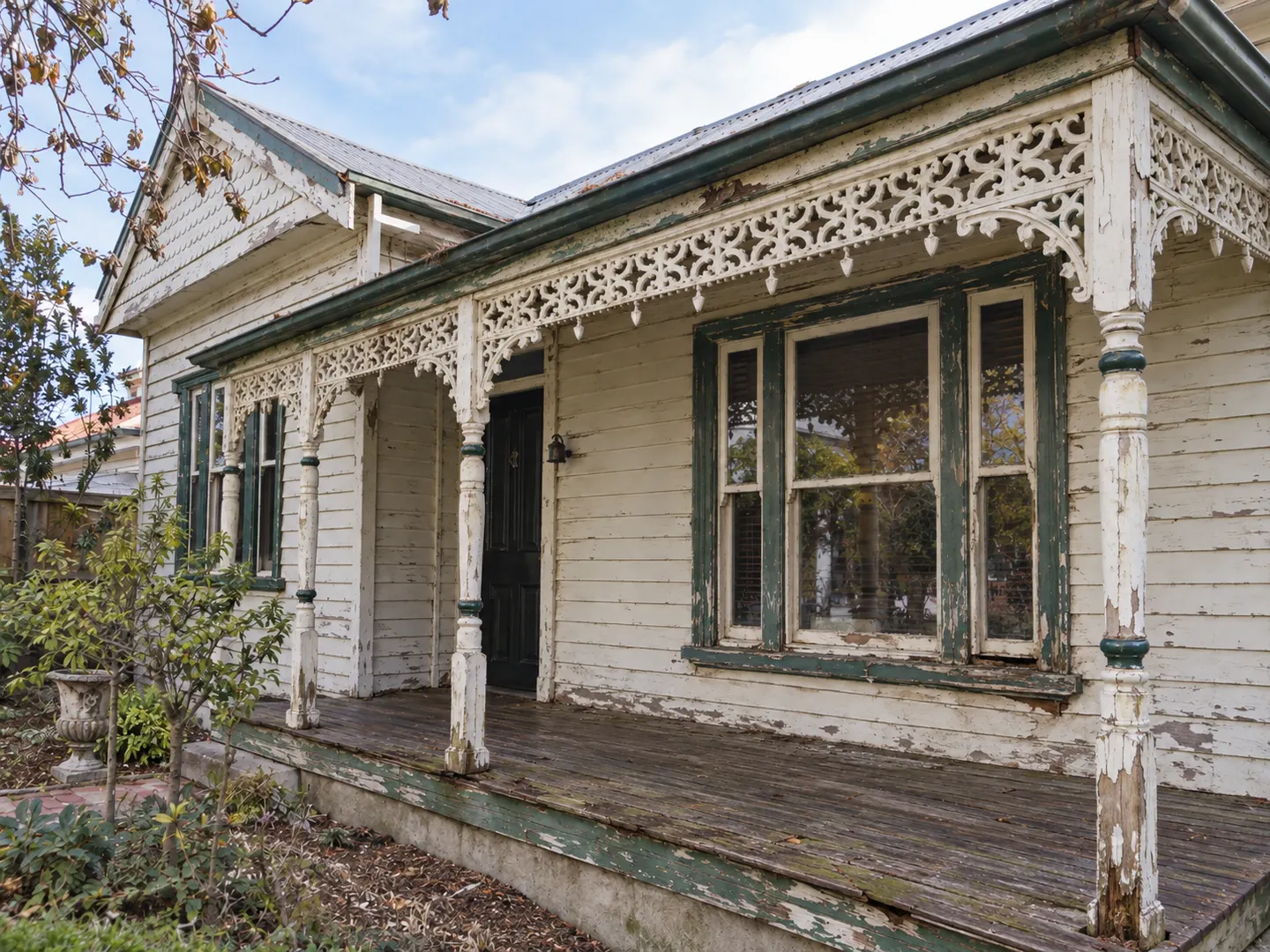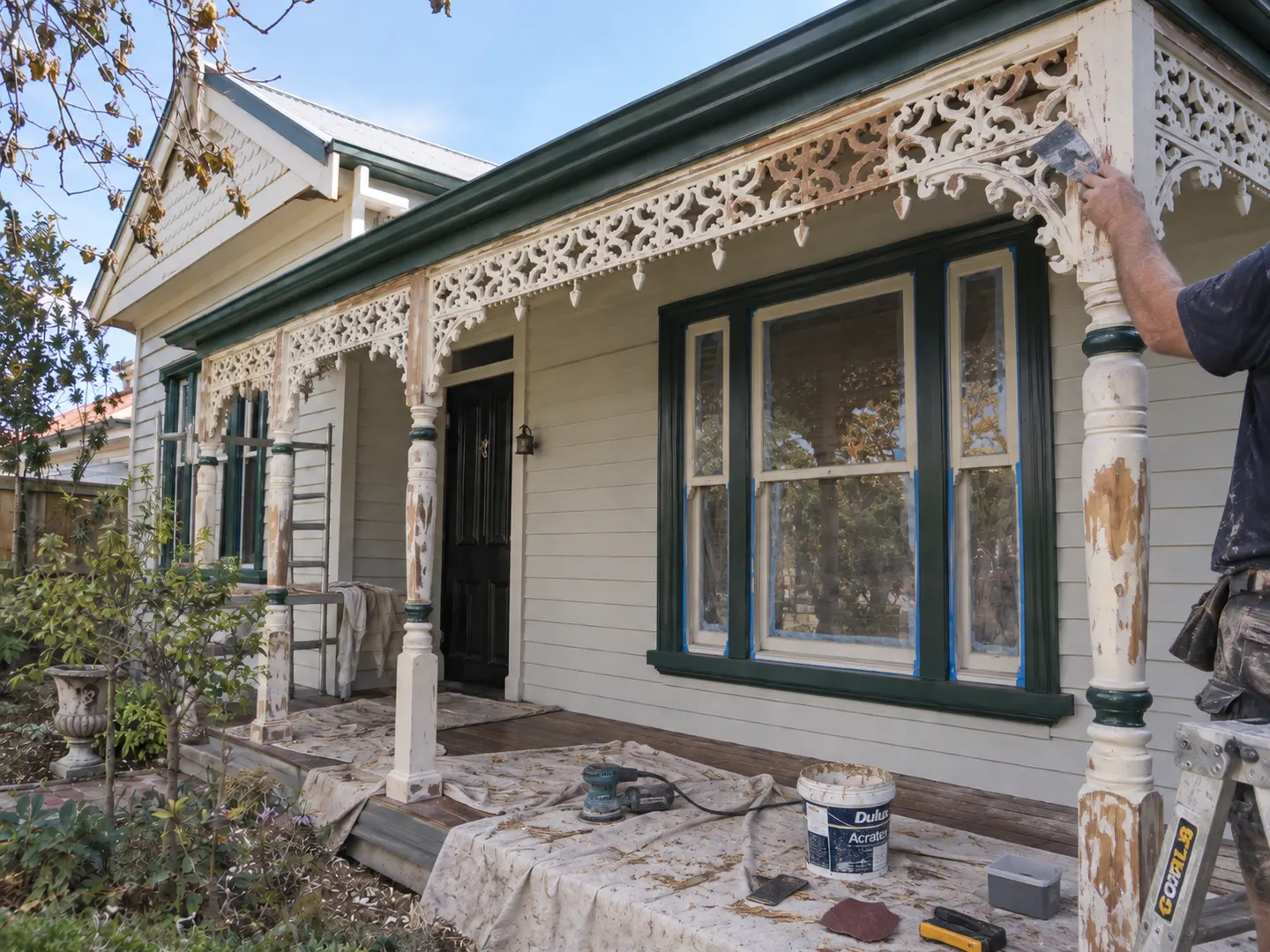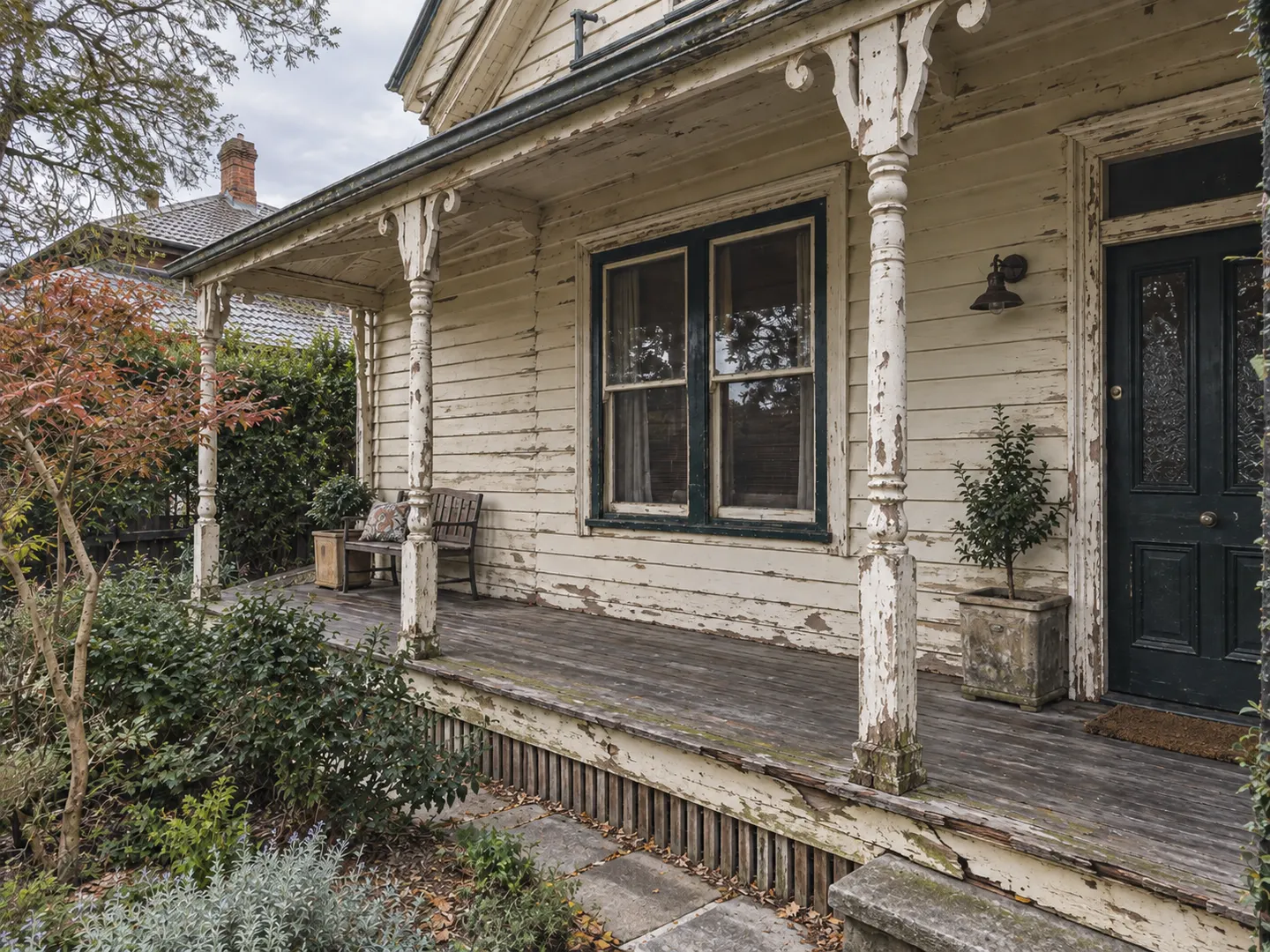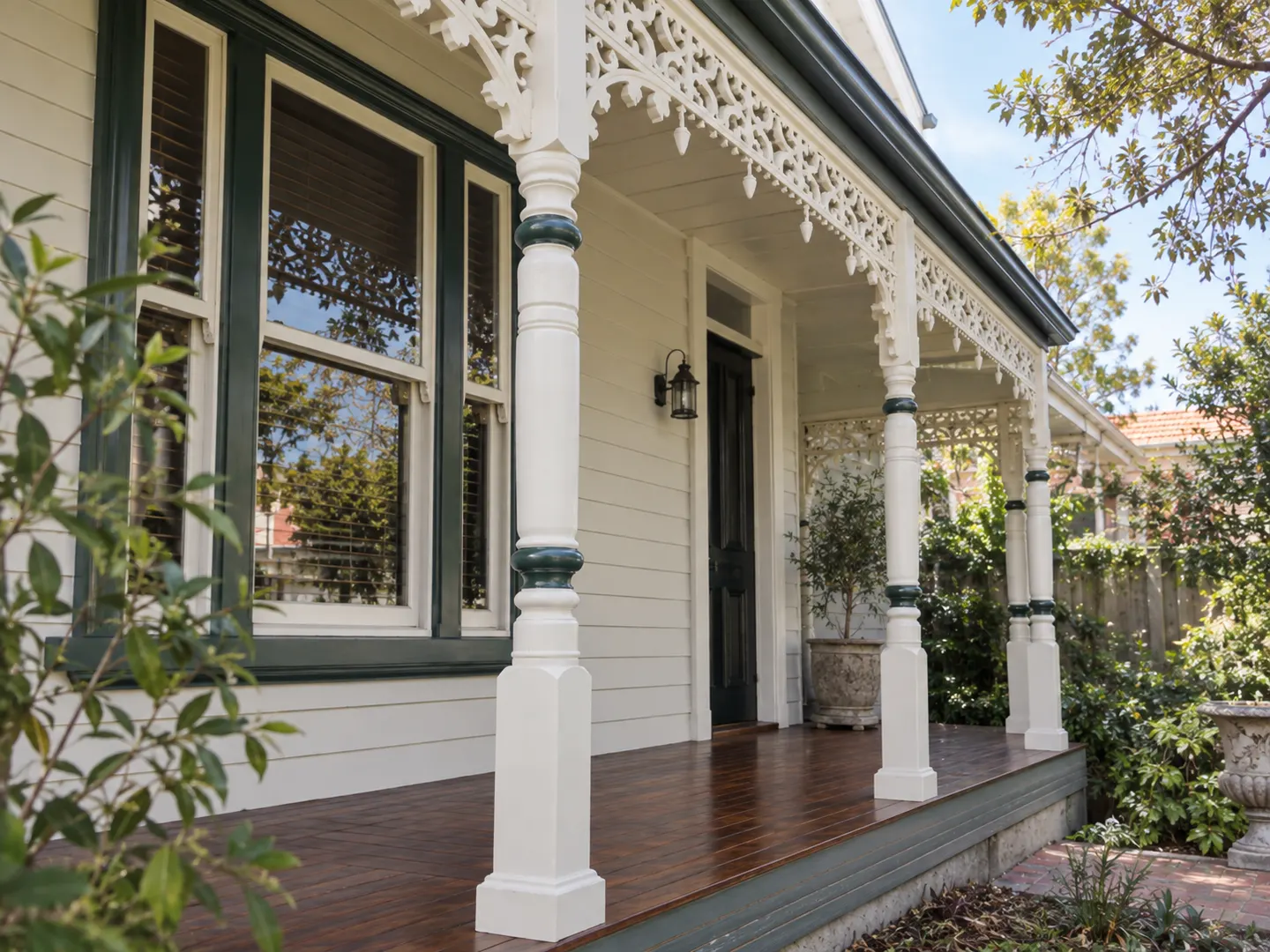
Record Original Joinery Before Heritage Timber Repairs
Start with the timber you want to keep: the window, door, verandah detail or decorative trim. We record its accessible damage, original profile, joints and hardware before discussing repair or replication. Include a sound reference section where available so the brief captures the proportions and details to retain, not just the overall opening size.
An old house is not automatically a listed heritage place, and requirements vary with the property and proposed work. Include known conservation advice, project documents and approval information in the brief. Resolve outstanding heritage and approval responsibilities with the relevant adviser or authority before the affected intervention proceeds.
Retain Original Joinery: Local Repair or Justified Replacement
Sound original material may be retained while damaged joints or sections are repaired. MEL ONE assesses the accessible timber and discusses whether a local splice, component repair or replication suits the element and agreed conservation approach. A cosmetic change alone is not a reason to assume the entire piece must be removed.
The repair method must also suit the timber's function. A damaged verandah post or supporting member needs the relevant structural assessment and design arrangements before alteration. Identify what remains, what is removed and which connections or adjoining surfaces need work so retention is supported by a workable scope.
Compare retention and repair against original joinery evidence
Heritage Timber Profile Matching, Samples and Details
When new material is needed, compare profile depth, width, joint arrangement, grain direction and the way the element meets surrounding work. A sound reference section or template can explain the intended match more clearly than a distant photograph. Availability and the agreed conservation approach determine whether an exact match or a recorded alternative is appropriate.
Repeated fretwork, carved trims and brackets need their pattern and installation positions established before replication. Natural timber and aged finishes may still look different after a careful profile match. Discuss preparation, coating and the extent of any wider finishing work before ordering repeated components.
Period Windows, Doors and Verandah Interfaces
A traditional window depends on its sashes, sill, frame, cords or balances, hardware, glazing and coating working together. Identify the actual mechanism and retained timber before choosing parts or a replacement strategy. Adjustment may improve operation where the timber is suitable; widespread decay, distorted frames or damaged glazing can need a broader coordinated repair.
Water paths and failing finishes also matter to the durability of external timber. Keep glazing, roofing, waterproofing and painting responsibilities distinct from the joinery, while planning their sequence with the repair. Existing project galleries provide examples of recorded work, but they do not determine the method or requirements for another property.
Heritage Carpentry Quote, Access and Ongoing Care
We agree which heritage elements and materials to retain, repair or replicate, using the recorded profiles and conservation approach. Before quoting, we discuss finishing, careful removal, access, protection, waste and any investigation stage. If concealed decay changes the repair, we agree the revised scope and price with you before removing more original material.
Keep a simple before-and-after record for each repaired element: its position, the profile reference, what was retained and what was replaced. At handover, record coating care and any specialist or finishing work still to be completed. This keeps the agreed repair and later maintenance tied to the actual window, door or verandah detail.
Original Timber, Matching Profiles and Approval Questions
Must heritage timber be replaced to improve operation?
No. Sound original material may be retained while local damage, hardware or joints are repaired. The condition and conservation requirements should guide how much intervention is justified.
Can modern profiles replace original heritage trim?
A modern profile may differ in depth, width, shape or the way it meets adjacent joinery. Record a sound reference section and discuss samples, materials and finish against the agreed conservation approach before ordering. Approval or consent conditions may affect the decision, so identify those responsibilities for the actual property instead of assuming any similar-looking trim is appropriate.
Who confirms heritage approval requirements?
Requirements depend on the property, its status and the proposed work. Confirm them with the relevant authority and heritage adviser where needed; the carpentry quote should state who obtains approvals before work starts.