Existing Decks: Repair Before Sanding or Oiling
We assess existing deck boards, fixings, edges and accessible supports before recommending repairs, sanding or recoating. Peeling coating and a few split boards can need a different scope from soft supports or widespread movement. A fresh finish cannot restore a weakened member or make an unsafe deck suitable for use.
We compare local board repairs, component replacement and a broader replacement scope against the condition found. Affected steps, barriers and supports need their safety and structural roles considered separately. A completely new deck or changed outdoor layout needs its own design and installation brief.
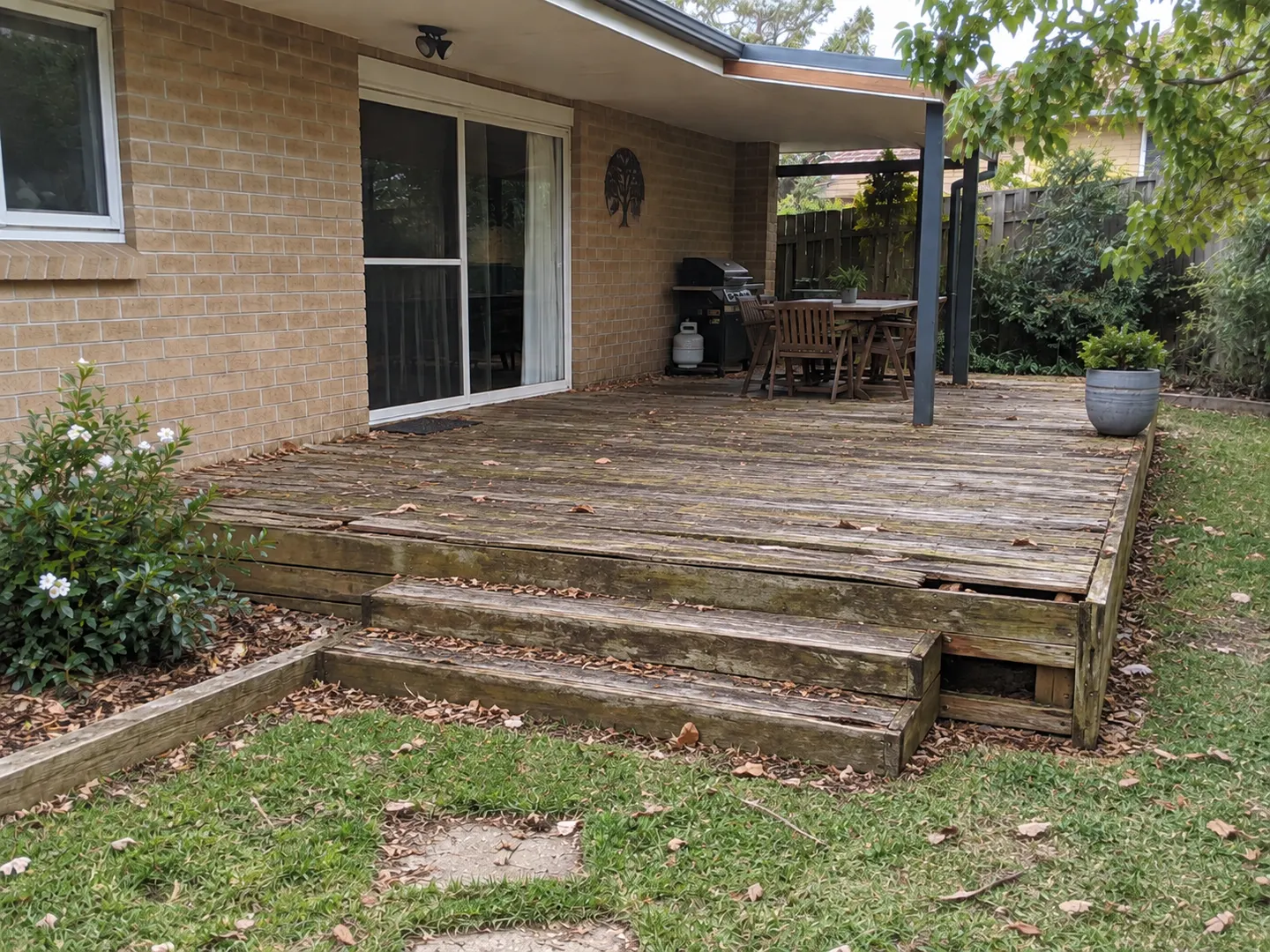
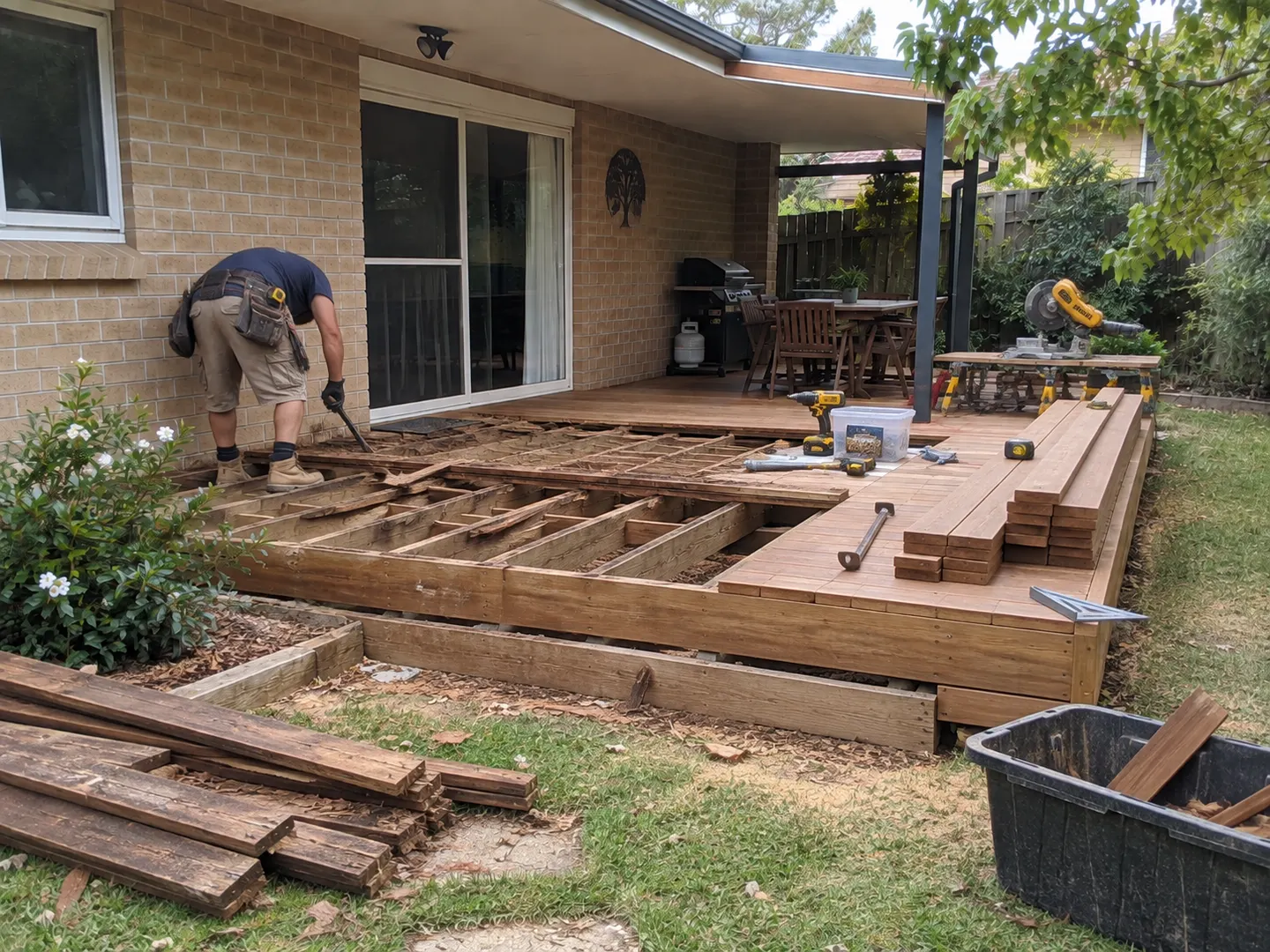
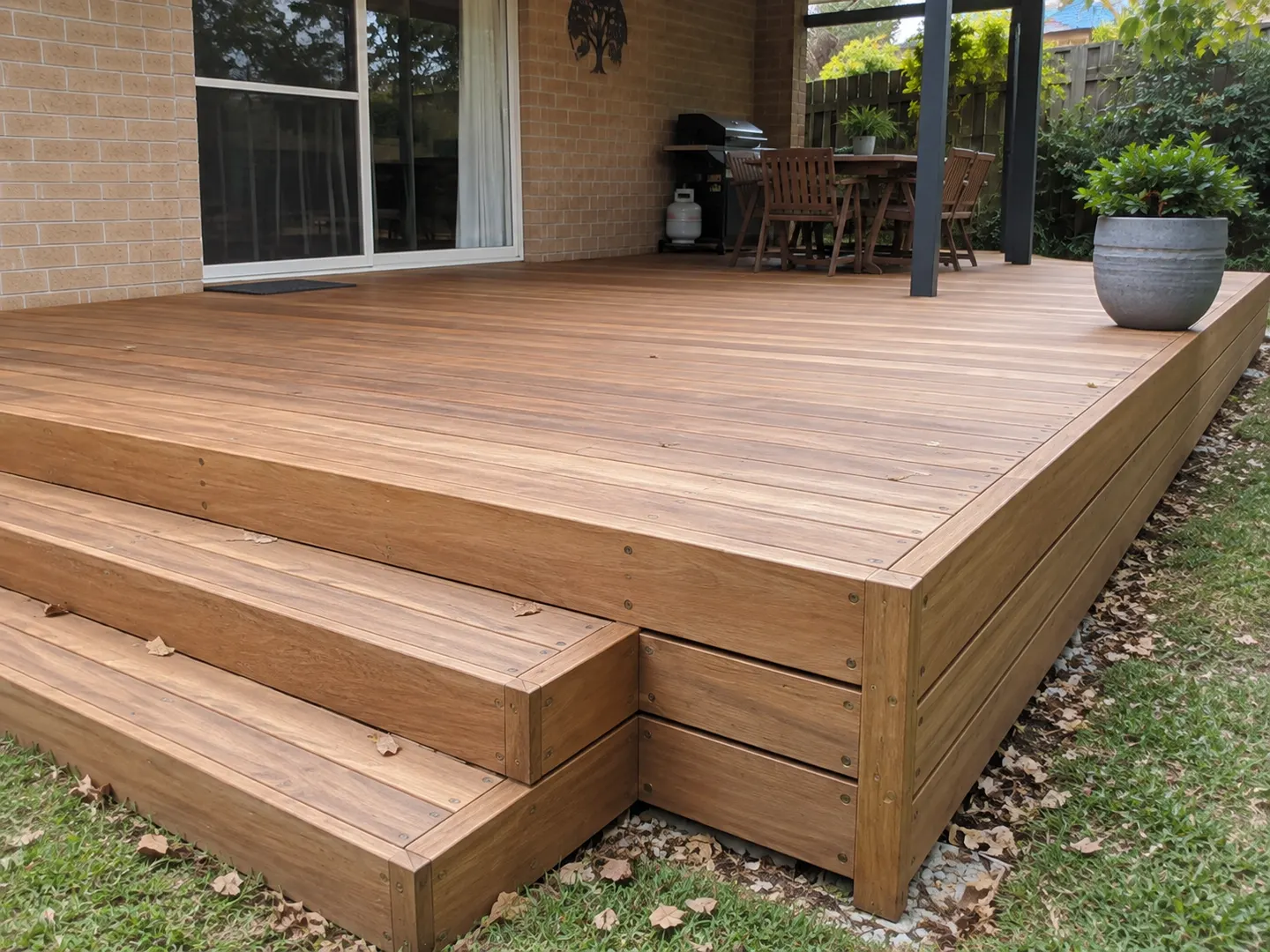
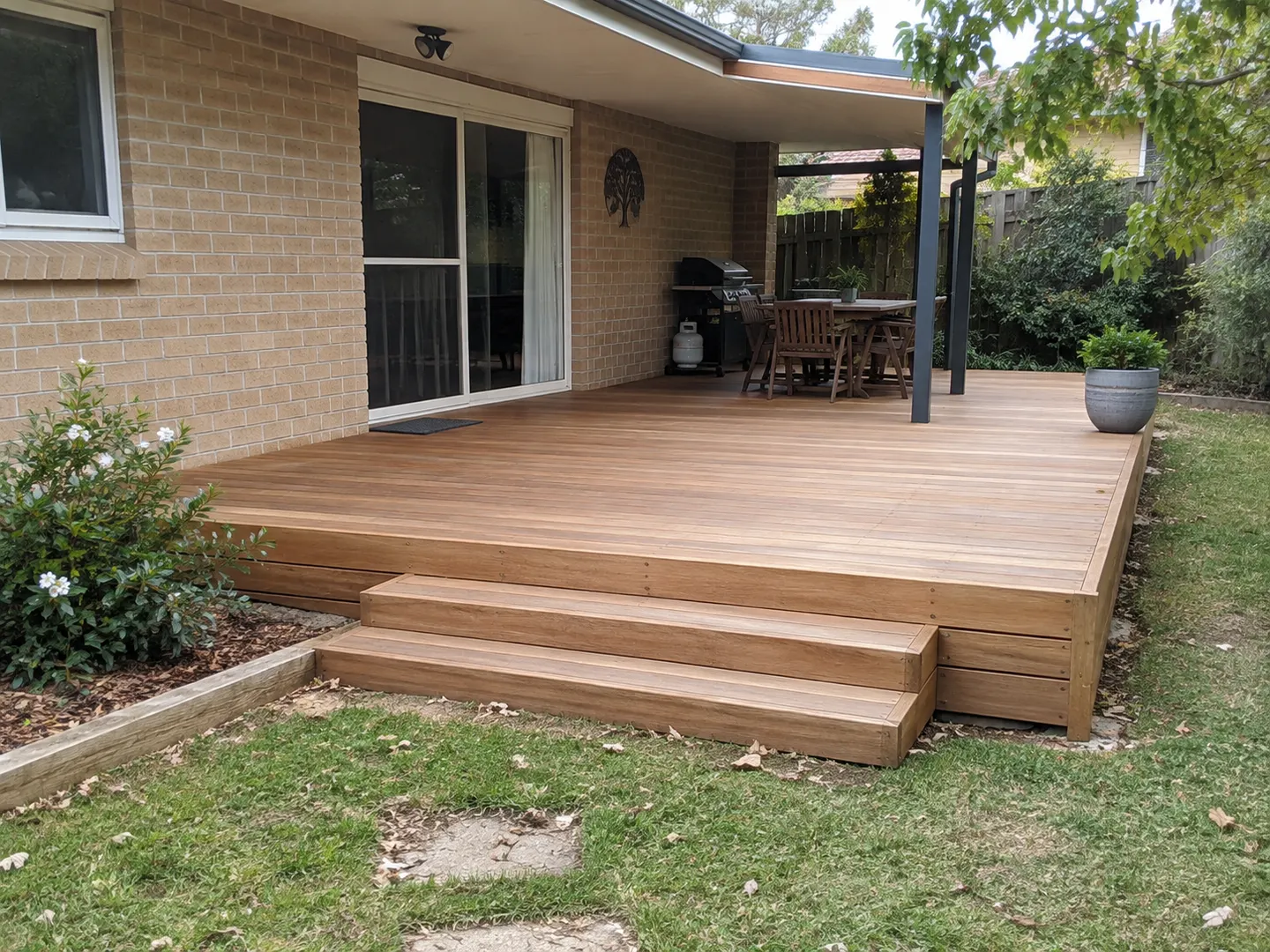
Our deck replacement photos show the weathered boards, boards lifted to expose the framing, completed step detailing and the finished deck. For your deck, the assessment determines what can be retained or replaced before we agree the repair and finish.
Compare deck repair and replacement · View the deck replacement photos · Assess decay across several timber components · Discuss urgent carpentry repair attendance
Indoor Timber Floor Repairs and Floorboard Replacement
Tell us whether the indoor floor is solid or engineered timber, and whether it moves, sounds hollow, creaks or has visible damage. We check the product, board profile and thickness, and accessible fixings or supports before agreeing a local repair. Water-damaged areas need the source of wetting checked before closing up. Indoor floors are assessed separately from outdoor decks.
Local floorboard replacement may be suitable where the surrounding floor and supports can be retained. Grain, age and colour can leave the new area visible, so wider sanding or finishing is a separate choice. Persistent bounce, a dipping floor or support deterioration needs its own subfloor assessment instead of being covered by a new board or coating.
With engineered boards, we check how the floor was installed, any moisture signs and whether matching replacement boards are available. The product's requirements and the assessed cause determine whether local adjustment or board replacement is suitable. Any sanding or refinishing is agreed separately after checking the wear layer.
Sanding, Coatings and the Achievable Finish
The remaining wear layer, previous treatments and current surface condition determine whether sanding is appropriate. The selected preparation and coating must be compatible with the identified product. A stain or oil can change appearance, but it cannot guarantee an identical colour across old boards, new repairs and areas with different exposure.
Discuss the desired result using the actual room or deck, with a sample or test area where useful. For outdoor boards, consider weather, drainage, exposure and cleaning as well as colour. Agree finish-care and slip-treatment expectations for the selected system without treating a coating as a structural repair.
If you are planning to use the deck over summer, tell us your preferred date when enquiring. We plan repairs before refinishing and allow for the selected coating's application conditions and drying requirements. The deck's condition and the weather affect that sequence, so we discuss when the area can be used as part of the agreed work.
Floor and Deck Work: Access, Edges and Trade Sequence
Indoor work may involve furniture, thresholds, skirtings and junctions to carpet or tile, while external work needs weather and underside access considered. Identify which boards or edge details need repair and who handles removal, protection and reinstatement. The quote should separate indoor flooring from outdoor decking even when both are in one enquiry.
Plan installation or surface treatment around other trades and the product's preparation and drying requirements. Completed areas need appropriate protection before furniture or traffic returns. Do not enter an unsafe deck underside to take photographs; explain any access limits so the assessment can identify what remains unseen.
A Restoration Quote and Care Plan
The MEL ONE team records the boards or components to repair or replace, fixings, preparation, sanding and coating in the quote. We confirm the assessed surface, access and finishing sequence with you, and record indoor flooring and outdoor decking as distinct work items.
The MEL ONE team confirms the treated area, selected finish, access, protection, waste removal and furniture handling with you, including agreed adjoining trim work. We record the preparation, treated area and product choices that shape the quote.
At handover, we review the repaired areas and finish with you, keep the selected product's drying and care guidance with the work record, and record any outstanding support or moisture work.
Deck Refinishing and Floorboard Replacement Questions
Can sanding fix a soft or moving deck?
Sanding changes the surface; it does not restore decayed supports or repair a failed connection. Inspect the accessible boards, fixings, edges and substructure before deciding whether refinishing is appropriate. Local repairs may need to happen first, while widespread movement or deterioration can require a broader assessment and a separately defined replacement scope.
Can damaged floorboards be replaced without refinishing the whole room?
Sometimes a local replacement is suitable, but the floor type, board thickness, fixing, accessible damage and finish decide the scope. A replacement can remain visibly different. Engineered products also depend on the remaining wear layer and manufacturer guidance; neither sanding nor a local patch is a universal solution.
Where should I enquire about a completely new deck?
Use Outdoor Living for a new deck or redesigned outdoor structure. This page starts with existing deck condition and also covers separately scoped indoor timber-floor work.